The Dutch Years
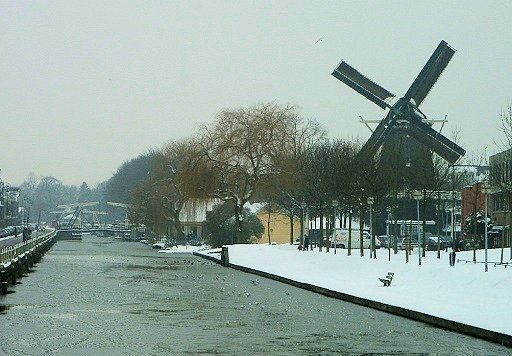
We arrived back in Holland in October, greeted by a bitterly cold climate that felt alien after four and a half years of living in shorts. Mum quickly took us shopping for new winter clothes, as none of us were equipped for the chill.
Our return presented a significant housing challenge. With no immediate accommodation available, our family was divided. I stayed with a married cousin who had a spare room, while the rest of the family was hosted by one of my aunties. Starting school again, I was placed back in the sixth grade, aligning with the Dutch school year, which ran from July through June, contrasting with the Australian school year from January through December. This meant enduring an additional six months in the sixth grade, which ultimately benefited my Dutch language skills. While I spoke Dutch fluently, my reading and writing needed improvement. Fortunately, the school was just around the corner from my cousin’s house, and I had my own room.
It took several months before our family was reunited in the second-storey home of one of Dad’s sisters. Some of her children had moved out, leaving three upstairs rooms for us. I had a small bedroom to myself, while my brothers shared another, and Mum and Dad made do with a trundle bed in the living room. Despite the less-than-ideal situation, Mum was able to cook again in the small kitchen, and we adapted as best we could, though Dad wasn't particularly popular with us during this time.
Eventually, we were allocated a house in Groenesteinstraat. This second-storey, three-bedroom apartment was situated on the corner of two streets, with tram lines running along one side, which made it feel somewhat familiar. The house was spacious by Dutch standards and had a decent-sized kitchen. I was thrilled to have my own room, which opened onto a small balcony shared with the kitchen exit door. Despite these improvements, Dad remained a contentious figure in my eyes.
By this time, I had finished primary school and enrolled in a business college. My strong maths skills made this a suitable choice. The three-year course included subjects like bookkeeping, typing, and stenography. Surprisingly, I enjoyed my time at school, making a few good friends, partly because I was an oddball and the eldest in the class.
In my final year of school, I befriended some English backpackers who invited me to stay with them in England. This led to several quick weekend trips to London. I also interned at the Amsterdam Rotterdam Bank during school holidays, setting the stage for a banking job post-graduation.
Working at the bank was a significant experience, and I believed it would facilitate my return to Australia upon turning eighteen. However, my first visit to the Australian embassy was a huge disappointment. They were not accepting migrants without specific skills, and bank clerks, a role typically filled by women in Australia, were not in demand. This setback strained my relationship with my parents to the point of irreconcilability, and I was eventually asked to leave home.
Feeling hopeless about returning to Australia, my life took a destructive turn. I resigned from the bank and worked in dubious nightclubs in The Hague, alternating between roles as a barman and disc jockey. Thankfully, this phase was brief, and I soon regained my footing.
I then secured a job as a waiter with the French catering company Wagon Lits, which operated bar and restaurant cars on European international trains. While the job seemed glamorous, it involved long, tiring days and challenging work conditions, including navigating moving trains with trays of food and drinks and staying in cheap hotels during layovers in Brussels, Cologne, and once a week in Paris.
Determined to migrate to Australia, I revisited the Australian Embassy and learned that nursing was a valued qualification. My application for a nursing training course in Leiden was accepted, and I soon started working there. After a few months, I moved into a nursing flat that had its own bathroom. I enjoyed my job and trained in both general and psychiatric nursing.
In early 1974, I returned to the Australian Embassy and was warmly welcomed. With the necessary qualifications, my application to migrate was approved. In April, I packed my belongings into a small crate and headed to the airport. My parents saw me off, with my mother predicting I wouldn't last more than a year in Australia. How wrong she was—50 years later, I was still there. (Later, when working for Contiki and making regular trips to Europe, Mum told me she saw more of me then than when I lived in Holland.)
These ten years were a roller-coaster of experiences, and I was relieved to leave Holland behind, hopeful that things would only improve from there.
Unfortunately, I lost most of my Dutch photos during my first major cyclone in Innisfail. The louvred windows allowed the howling wind to drive rain into my spare room, ruining some of my photo albums.
Click on any photo below for a larger view.
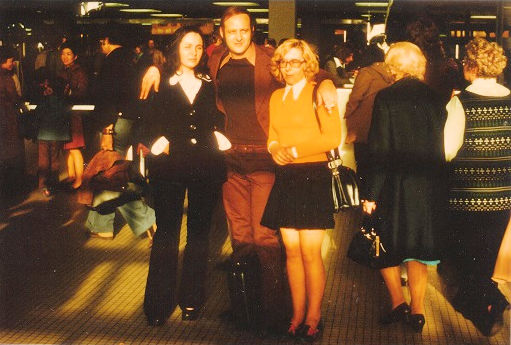
Saying farewell to two colleague nurses at Schiphol Airport

Class of 1963

Class of 1965

Class of 1966

Appartment in The Hague

Groenestein Straat

My brother Rob (r) with friend

My Dutch moped a Puch Florida - doesn't look much but had a max speed of 70kmh
This model had a 50 cc fan-cooled, 3-speed gearbox
This model had a 50 cc fan-cooled, 3-speed gearbox

Waiter John on the trains

My brothers Robert (l) and Dick (r) on holidays in the Dutch countryside

A typical Dutch winter
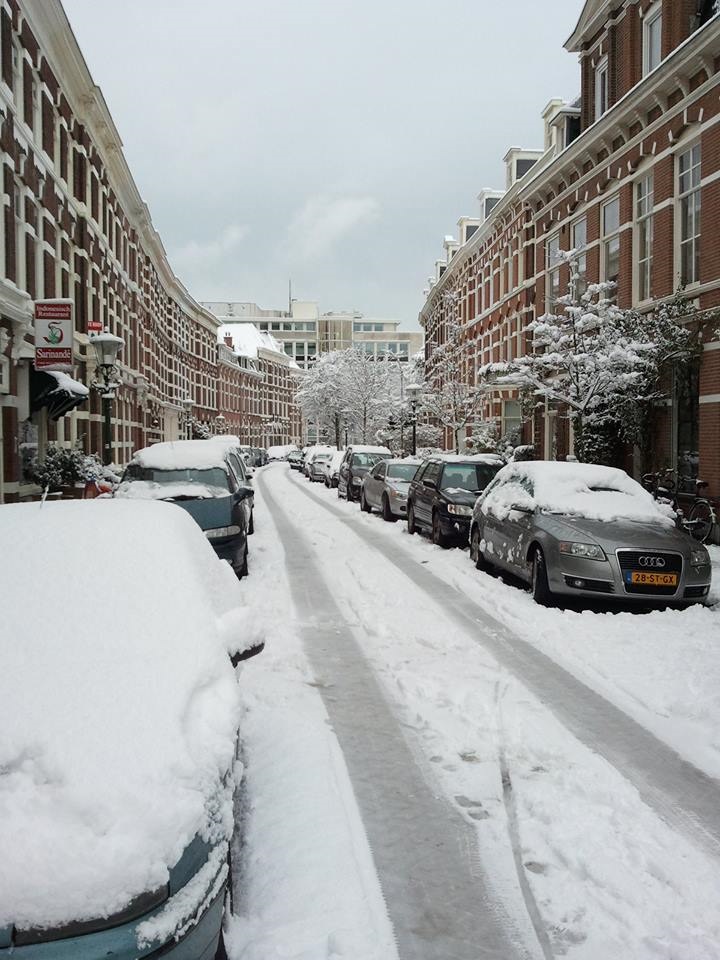
A typical Dutch winter

A typical Dutch winter
Thank you for joining me on my journey