Migration to Australia

On March 17, 1958, the MS Sibajak departed from the Lloydkade in Rotterdam, embarking on her penultimate voyage, a journey that would take her from the bustling Dutch port to the distant shores of Sydney, Australia. This once-magnificent ship, built in 1928 and renowned for her service as a passenger liner between Java and Rotterdam, was now carrying emigrants to a new life on the other side of the world. It was a bittersweet journey for the venerable vessel, recently sold for scrap, making one of her final trips before being consigned to history.

Among the passengers was the Henderson family: Jan and Dora, along with their three children, Hans (now John), Rob, and Dick. At the tender age of eight, I, Hans, embarked on this adventure, a journey that would be etched into my memory forever. This account, enriched by the recollections of my family and fellow passengers, captures the essence of our epic voyage.
As the gangway was hauled up and the anchor raised, the mooring ropes were loosened, and the MS Sibajak slowly drifted away from the quay. The harbour receded into the distance as we embarked on a six-week odyssey. With 1,500 men and women on board, we left the familiar shores of Rotterdam and ventured into the unknown. The ship, though ageing, still held an aura of grandeur, even as pieces of rust flew in the strong wind.

Our family was assigned a four-berth cabin where my mother shared the space with us children, while my father stayed in a dormitory-style cabin with other men. The first leg of our journey took us to Southampton, where we welcomed English emigrants aboard. We were not allowed to disembark, but the sight of the open ocean the next morning filled me with excitement.


Life on board was a wonder for an eight-year-old. The ship, vast and full of intrigue, offered endless entertainment. Nearly six days passed before we sighted land again.

Our next stop was Willemstad, on the Dutch island of Curaçao. Arriving in the evening, we marvelled at the Queen Emma Bridge, a unique pontoon bridge connecting the Punda and Otrobanda quarters of Willemstad. The bridge, built in 1888, is the only floating wooden swing bridge in the world, opening regularly to allow the passage of oceangoing vessels.

This was our first shore leave, and the warm, humid air greeted us as we stretched our sea-weary legs along the dock. The city, with its Dutch-influenced architecture, offered a comforting touch of familiarity amidst the exotic surroundings.

Our journey continued to San Cristobal, where a Dutch couple eagerly awaited us on the dock. Inviting us to their home for lunch, they were keen to hear firsthand news from Holland, a precious commodity in those days of slow communication. My brother Dick still remembers the cold drinks served in metal beakers, a simple pleasure that left a lasting impression.

One of the most awe-inspiring experiences of our voyage was traversing the Panama Canal. This engineering marvel, completed in 1914, allowed ships to ascend and descend in steps, keeping them perfectly level at all times. The sensation of the ship being lifted and lowered through the locks was unforgettable. We were so close to the edge of the canal that we could almost pluck oranges from the trees lining the banks. The small trains, or "mules," that guided our ship through the locks fascinated me and sparked a lifelong interest in trains.

After approximately 12 hours, we emerged from the canal and entered the vast expanse of the Pacific Ocean. The journey was far from luxurious; our passage, paid for by the state, meant we ate below deck on long tables, well below sea level. Despite the Sibajak being converted to a "one class" migrant ship, a distinct divide remained between migrants and paying passengers.
As we crossed the equator, those of us who had never made the journey before were ceremonially baptised by Neptune, the God of the Sea, a tradition that added a sense of camaraderie and adventure to the voyage. Each of us received a certificate to commemorate the occasion.

Our next destination was Pape’ete, Tahiti, where we arrived early one morning. The island's breathtaking beauty was evident as soon as we docked. We were welcomed by local girls in grass skirts who adorned us with flowers. The main street lay just beyond the dock, inviting us to explore the vibrant market filled with exotic goods. My mother, in her element, led us from stand to stand, absorbing the sights and sounds of this tropical paradise.


The ship didn't depart until late that night, allowing us ample time to soak in the island's atmosphere. As we sailed onward, the ocean teemed with flying fish leaping for the scraps thrown overboard, and seagulls circling above, signalling the proximity of land. At times, weeks would pass without sight of land, making these encounters all the more thrilling.

Our final stop before reaching Australia was Wellington, New Zealand. Here, we took a bus trip into the hills, offering a panoramic view of the harbour and the Sibajak. My mother remarked on the natural beauty of the southern hemisphere, a sentiment that resonated with us all.


Three days before our anticipated arrival in Sydney, we encountered an enormous storm. The old ship was battered by fierce winds and towering waves, shuddering under the onslaught.

The Moluccan crew, seasoned sailors, began to panic, and even my mother, usually calm and composed, screamed as our belongings were tossed about the cabin. The ship, nearly rudderless, struggled to maintain course. Plates and glasses shattered, adding to the cacophony. I perceived it as an adventure, unaware of the true peril we faced. Only later did we learn of the many ships reported in distress by the Australian newspapers during that storm.
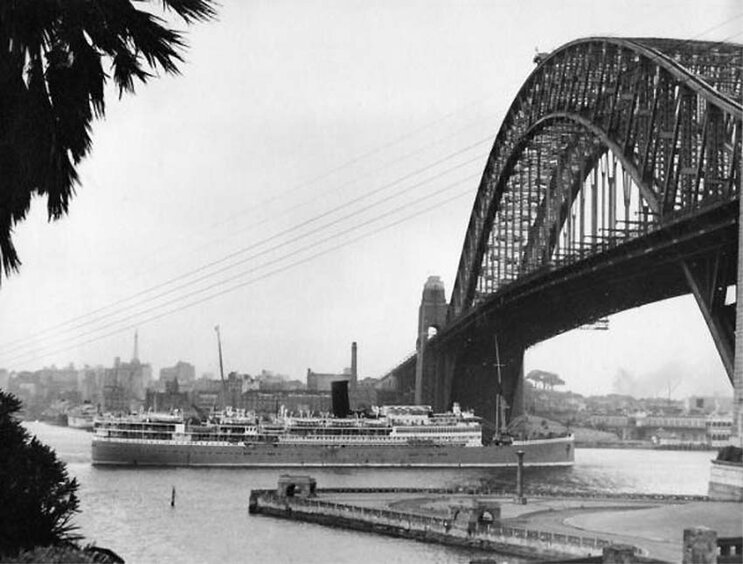
Miraculously, the storm abated, and after nearly six weeks at sea, the rugged coast of Australia came into view. We entered Sydney Harbour, a breathtaking sight that signalled the end of our epic journey. The MS Sibajak, despite her age and imminent fate, had carried us safely across the world, and we had arrived at last.
Some souvenirs and trinkets from the MS Sibajak
1928 Deck Plan

Menu cards with pictures drawn by Anton Pieck
Don't think we got any of these. They were surely meant for paying passengers.
Very interesting though,,,,


Migration documents from our arrival in Sydney.

Many thanks to ssmaritime for some of the history and pictures of the MS Sibajak.
For further information on the MS Sibajak please follow the link to http://ssmaritime.com/sibajak1.htm
Thank you for joining me on my journey